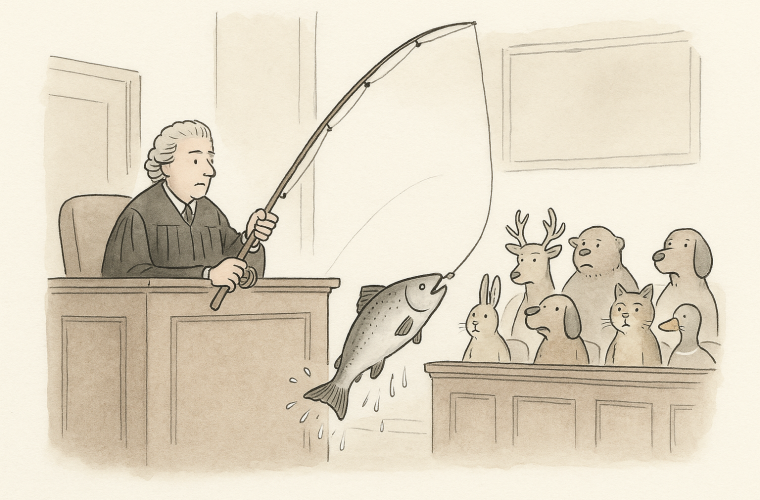
It is, at the time of writing, a criminal offence in England and Wales to handle a salmon in suspicious circumstances. Not to steal one, mind — theft was already covered, thank you very much, since roughly the Bronze Age. Section 32 of the Salmon Act 1986 exists because Parliament, faced with a poaching problem, decided the answer was a brand-new offence with a name that sounds like a rejected Monty Python sketch. Nearly forty years on, it’s still there. Nobody has ever mustered the energy to tidy it up.
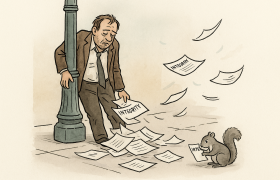
And that, in one fishy anecdote, is the modern political disease. Ask a politician what they’ll do about anything — knife crime, potholes, the moral collapse of the young — and the answer is always the same: new legislation. A bill. A crackdown. Something with a stern name to wave at the cameras. Whether the last seventeen laws on the same subject were ever enforced, funded or even read is a question for the birds. Legislation has become the political equivalent of looking busy when the boss walks past.
The numbers are genuinely startling. New Labour, according to widely reported analysis at the time, created more than 3,000 new criminal offences between 1997 and 2010 — pushing towards one for every single day Tony Blair and Gordon Brown were in office. Not new laws, mind: new ways of being a criminal. One a day, like a vitamin.
The Cameron years were supposed to be the corrective. The coalition came in promising a bonfire of red tape — ‘one in, one out’ for regulation, later upgraded, with a straight face, to ‘one in, two out’. And yet by one count the Cameron administration still managed to produce over 4,000 new laws. That’s the thing about the sausage machine: even the people elected to switch it off end up feeding it. And that headline figure doesn’t even capture the real torrent, because most law in this country never troubles the House of Commons at all. It arrives as statutory instruments — ministerial regulations nodded through in their hundreds every year, scrutinised by approximately nobody, printed on legislation.gov.uk and read by even fewer.
Here’s the uncomfortable arithmetic: if a law worked, you wouldn’t need seventeen sequels. The fact that every Parliament produces a fresh Criminal Justice Act — there have been so many they need years bolted on to tell them apart, like Rocky films — is not evidence of vigour. It’s evidence that the last one didn’t do the job, and neither will this one, because the problem was never a shortage of statute. It was a shortage of coppers, courts, prison places and patience.

 Reportage