
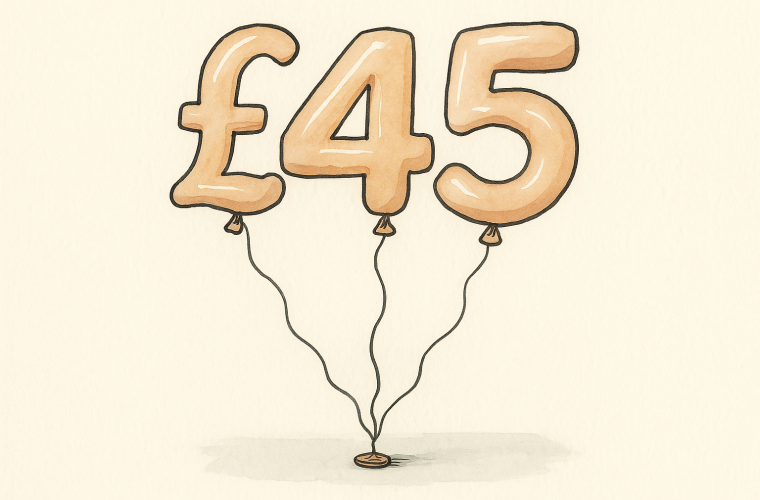
Twenty-five pence a day. Frame it, laminate it, tell the grandkids. That, once you peel the bunting off Andy Burnham’s flagship VAT cut on energy bills, is the size of the miracle: a saving the announcement puts at roughly £45 per household, doled out over six months, after which the whole thing evaporates like a chancellor’s promise on Budget night. Twenty-five pence. It won’t stretch to a Freddo, and the Freddo has long been the true canary in Britain’s inflationary coal mine.
“Flagship” is doing heroic work in that sentence, by the way. Flagship of what fleet? A pedalo and two lilos? The word is supposed to conjure something vast and gun-metal grey ploughing through the swell. What we’ve actually been handed is a dinghy with a slow puncture and a six-month lease, and we’re expected to salute as it wobbles past.
Let’s do the sums the podium would rather we didn’t. Forty-five quid, we’re told, spread over six months — call it 25p a day. That is not a windfall. That is the shrapnel down the back of the sofa, the coins in the pocket of the coat you haven’t worn since February. And — here’s the bit delivered in the small-print voice — it’s temporary. Six months on, the VAT snaps back, the bill ticks up, and the miracle is quietly repossessed. Nobody holds a press conference for the repossession. They never do. The launch gets the lectern and the flags; the reversal gets a line in a spreadsheet published at teatime on a Friday.
We have been here before, of course, more times than is dignified. British politics keeps a whole cupboard of these conjuring tricks: the stamp duty holiday, Eat Out to Help Out, the fuel duty freeze re-announced annually like panto season and reported each time as though the writers had produced something new. The formula never varies. Take a small, temporary tweak. Bolt on a large, permanent adjective. Stand in front of a lectern looking like a man who has personally rewired the national grid. Then get out before anyone divides the headline figure by the number of days it actually covers.
Division is the enemy of the whole genre, you see. Announcements deal in big, round, annual-sounding numbers because big round numbers photograph well. Daily rates are for accountants and cynics. But your energy bill doesn’t arrive once, wrapped in a ribbon; it arrives relentlessly, month after month, and at that resolution the revolution shrinks to something you could lose in a car park ticket machine.
And here is what the 25p doesn’t touch, not even slightly: Britons still pay more for their power than most of Europe. That’s the actual story — the structural, boring, unphotogenic one. Our bills aren’t high because VAT is a couple of points too greedy; they’re high because the whole system costs more than our neighbours’, and has done for years. A temporary tax shave doesn’t ask why the meter spins faster here than across the Channel. It just trims a sliver off the receipt for half a year and hopes you’ll be too grateful to read the rest of it. A plaster on a broken leg, applied with full ceremony, then peeled off again before the leg has noticed.
There’s a meaner wrinkle, too. VAT is a flat percentage, which means the saving scales with the bill. The pensioner heating one room of a draughty terrace with the thermostat set to “stoic” pockets less, in cold hard pence, than the family running a hot tub behind a six-bedroom gaff. As redistribution goes, it’s upside down. If you actually wanted to help the people choosing between the heating and the big shop, you’d target them — but targeting is fiddly, slow and invisible, and invisible doesn’t make the six o’clock news. Twenty-five pence for everyone, and a photo opportunity for one.
The generous reading — and somebody has to attempt it, grim work though it is — says gestures matter. Households are knackered, trust is shot, and any relief beats a lecture about wholesale markets. Fine, as far as it goes. But governing by gesture has a cost of its own: it teaches politicians that appearing to act and actually acting are interchangeable, and it teaches the rest of us to price every promise at a discount. When the announcement is the policy, the policy is the announcement — and six months later there’s nothing left of either but the invoice.
So enjoy the £45, such as it is. Put it towards something sensible, or blow it on chips — at 25p a day, either plan takes a while. And when the discount lapses on schedule, when the bill lands heavier just as the evenings draw in, and when somebody steps up to a lectern to promise the next miracle, do the one thing the format cannot survive. Get out the calculator. Divide by the days the thing actually lasts — not the 365 the headline hopes you’ll assume. Last time round, the revolution came to less than a Freddo a day — and unlike the Freddo, it melted before winter.