Nigel Farage has called a by-election in Clacton and scheduled it for the middle of August 2026. Savour that for a second. The one month of the year Fleet Street officially designates the silly season — the month of skateboarding ducks and sharks allegedly spotted off Cornwall — will now feature an actual, legally binding contest for a seat in the House of Commons, held on the Essex coast at the absolute height of the candyfloss trade. If you were designing the perfect habitat for the great British joke candidate, you couldn’t have done better with a compass and a government grant.
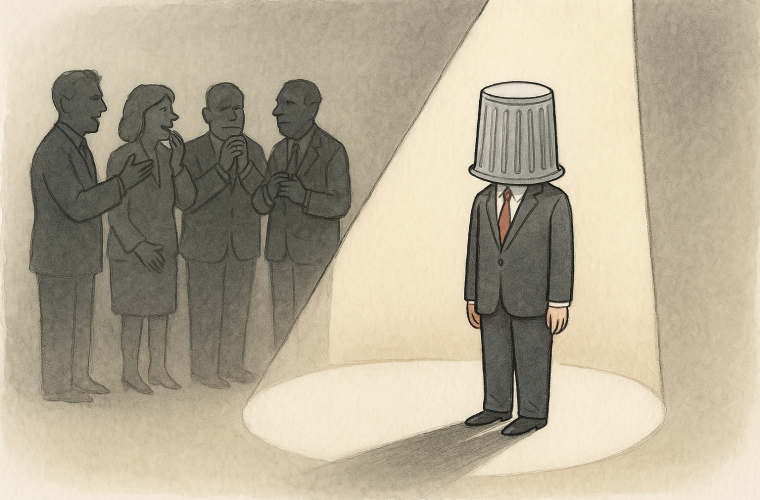
So picture the count. Gone two in the morning in a Clacton leisure centre, the kind with strip lighting that makes everyone look like they’re auditioning for a hostage video, and the returning officer is reading out the numbers. Polite applause for the winner. And then, two along from whichever poor sod has spent the hottest weeks of the year shaking damp hands on the seafront, stands a man with a bin on his head. Silver. Dented. A small satellite dish bolted to the top, because of course there is.
That will be Count Binface, or one of his gloriously unhinged brethren, because a by-election with this much national attention draws deposit-losers the way a chip supper draws gulls on Clacton pier. Form suggests he’ll poll a few hundred votes. He will not be moving into Westminster. But here’s the thing the snorting pundits and tutting grandees never quite cotton on to: he may well be the most honest name on that ballot paper.
Stay with me.
The joke candidate is one of those gloriously British institutions, like queuing or apologising to furniture you’ve bumped into. We had Screaming Lord Sutch and his Monster Raving Loony Party rattling around our by-elections for the best part of thirty years, demanding passports for pets and the abolition of January. The by-election was his natural habitat — those mid-term contests where the great parties send their bag-carriers to be hammered and the cameras go looking for something to laugh at. We laughed. And then, one by one, a fair few of his daft ideas — votes at eighteen, all-day pub opening, commercial radio — quietly became the law of the land. Funny, that.
Because the genius of the bucket-helmeted spoiler is not the gag. The gag is the door. What walks through it is something far more serious: a candidate who can stand at a count and say the quiet part out loud without a single career consideration weighing on his tongue. Count Binface cannot be deselected. He cannot be reshuffled to the back benches. There is no whip’s office that can summon him for a quiet word about loyalty. He has, in the most literal sense, nothing to lose but his bin.
And that is a kind of freedom the rest of the Clacton ballot can only dream of.
Think about what we actually ask of the people seeking to govern us. We demand they have opinions, but not opinions that frighten the focus groups. We demand authenticity, then crucify the first one who says something genuinely unguarded. The modern candidate is a creature of message discipline, sanded down by media training until every answer has the texture of a wet flannel. They speak in that strange dialect — “let me be clear,” “what the British people really want” — that means precisely nothing while sounding terribly sincere. There is a delicious irony in all this happening in Farage’s back yard, given that the man who called this contest built an entire career on sounding like the bloke at the count who didn’t talk like the others. He, of all people, should appreciate the competition.
Into that managed silence strolls a man in a metal hat, and he’s the one telling the truth.
It’s the Fool in King Lear, isn’t it? The only character permitted to tell the old man he’s a vain idiot careering towards catastrophe is the one in motley, jingling a stick. Licensed by his very foolishness. The court takes him seriously precisely because nobody can accuse him of angling for the throne. Our democracy, in its scruffy, deposit-losing way, has reinvented exactly that role. The £500 deposit is the price of admission, and a remarkable number of decent oddballs are willing to chuck it down the drain for the privilege of saying something real on the telly.
And honestly, where better than Clacton in August? The British seaside is where this country has always gone to laugh at itself — the end-of-the-pier show, the saucy postcard, the donkey with opinions. A joke candidate on a summer seaside ballot isn’t an intrusion on democracy; it’s democracy on its holidays, letting off steam before the pressure does something nastier. In countries where you may not laugh at the powerful in a polling booth, you tend to find the powerful are not very funny people, and not at all keen on being laughed at. The freedom to put a bin on your head and stand for Parliament is the same freedom that lets the rest of us sleep at night. Democracy with a sense of humour about itself is democracy that is actually well.
We ought to be rather proud of it.
And let’s not pretend the man behind the visor is a fool. Running a campaign — even a daft one, even in a heatwave — is graft. You need a manifesto, however gloriously unhinged; you need to turn up, stand on the prom, do the rounds. There’s a craftsmanship to good political satire that has more in common with a perfectly weighted through-ball than a custard pie. The targets are precise. The timing is everything. Behind every gag about renaming a motorway after a celebrity lies a sharp little observation about how seriously we take the wrong things.
So when the cameras descend on Clacton this August, and they will, and the lens lingers on the bloke in the bin while the winner clears his throat, resist the easy smirk. Don’t see a wasted vote. See a sentinel. See the last candidate on that stage who can afford to mean what he says.
The emperor, after all, never knew he had no clothes. It took someone with nothing to lose to point at him and laugh.
Long may they lose their deposits — preferably with an ice cream in hand.